
Headband.
Keep both hands
on the task.
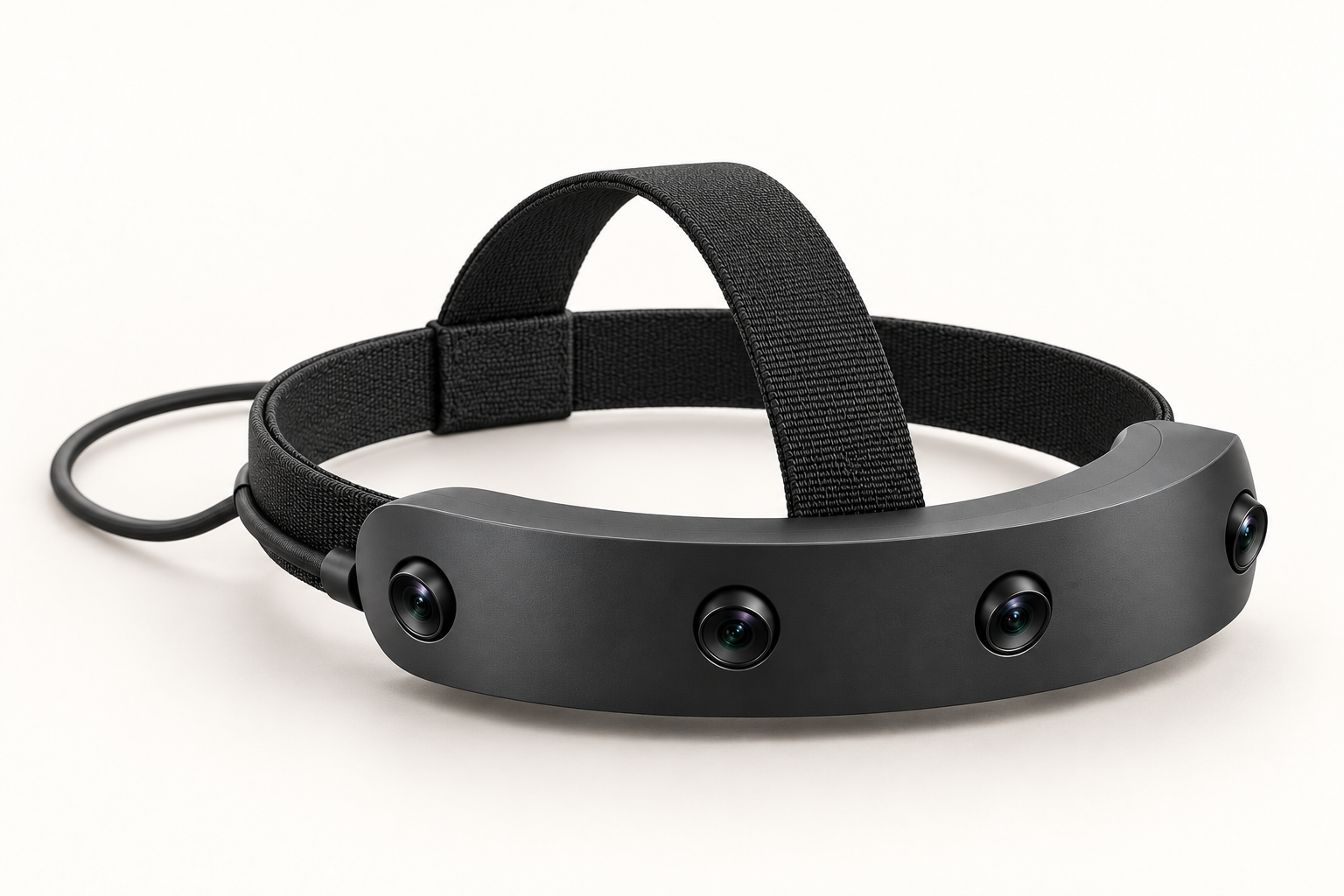
A camera headband for teaching robots. In development.
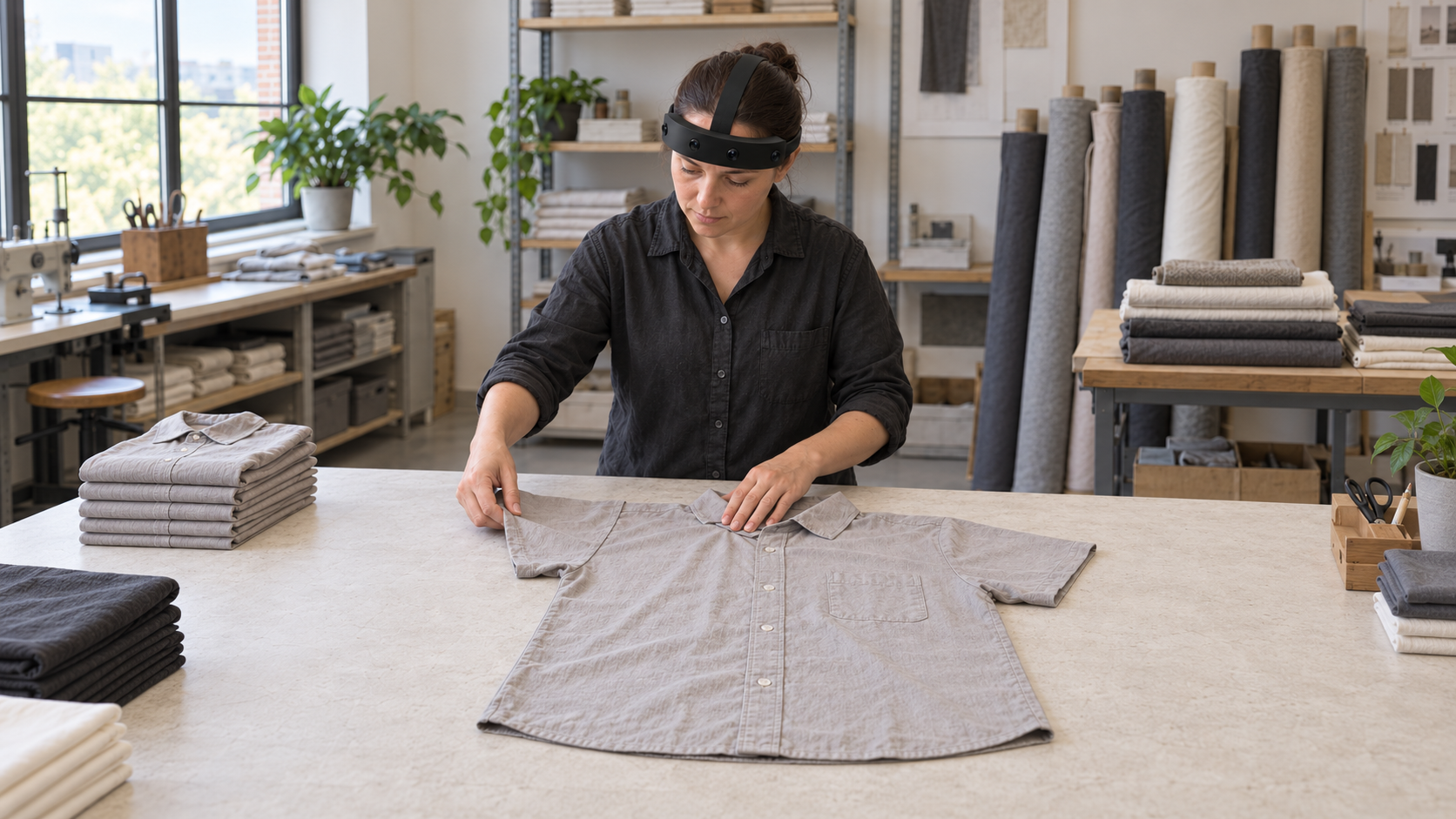
Your eyes on the work.
Your hands free to do it.
Place a component. Fold a garment.
Demonstrate the work with your own hands.
Designed around
your perspective.
The curved front follows the forehead. Straps pass over and around the head, leaving the face open.
The design keeps power and recording equipment off the head, linked by one cable.
How depth is planned to work
RGB shows what a scene looks like. Two synchronized, calibrated camera views are planned to help estimate how far away hands and objects are, and where they sit in 3D space.
Software would also estimate hand movements and detect or outline the objects used in a task.
This is the planned stereo architecture. Precision, working range and finger-tracking accuracy have not been validated. More cameras alone do not establish precise geometry.
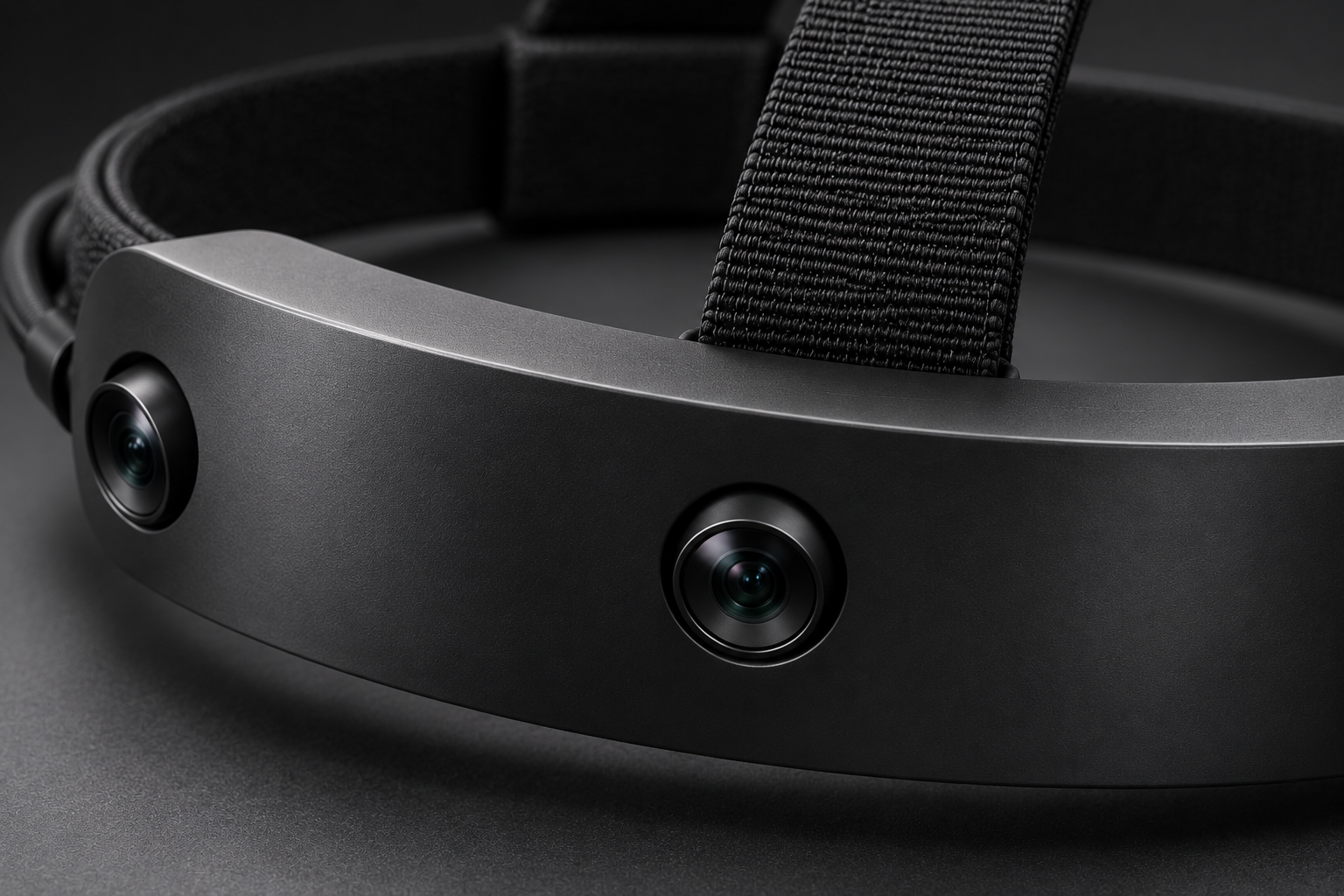
Take a closer look.
The complete form.
Camera array.
Planned synchronized, calibrated stereo views for estimating distance and where hands and objects sit in 3D space. Accuracy still needs validation.
Motion sensor (IMU), planned inside.
Intended inside the front housing to measure rotation and motion. It cannot track position without drift on its own.
Off-head power and recording.
A planned tether keeps power and recording equipment off your head. The cable connector is not finalized.
Adjustable straps.
Intended to secure the headband while keeping your face and eyes open. Personal fit needs testing.
From human hands.
To humanoid hands.
Show the work with your own hands. Our goal is to help humanoids learn those movements. Finger tracking and robot learning remain in development.